The Audition Trap That Keeps Voice Actors BROKE
Auditioning is keeping you broke, and if you don’t change your approach, your dream of being a full-time voice actor might always be just out of reach.
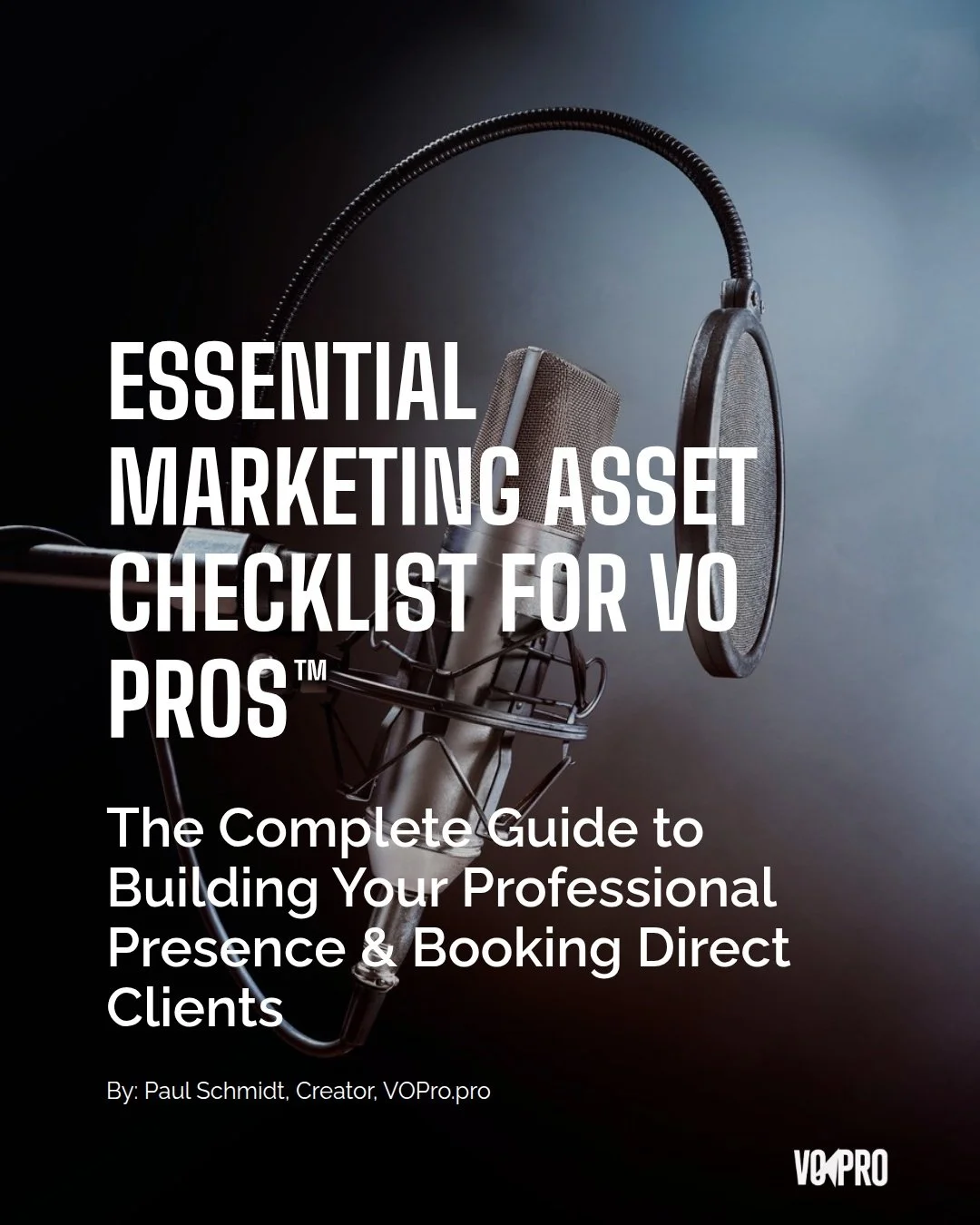
Make sure you don’t miss any crucial marketing assets. Get your free checklist guide now. Click on the image above.
When most voice actors imagine their big break, they picture landing a dream gig from some magical audition. Scroll through any voiceover Facebook group, and you’ll see talent lamenting that if they just booked more auditions, the good times and big money would roll in.
But what if the very system you’ve trusted, the endless cycles of online auditions, is destined not to make you rich, but to keep you stuck?
What if success in voiceover isn’t all about being the best performer... but about becoming the best business owner?
Let’s get into the hidden mechanics of the VO audition machine, why so many voice actors remain shackled to platforms that give more hope than money, andmost importantly how you can break free to finally build a thriving, full-time voice over business.
The Allure and Lies of the P2Ps
The Lottery Ticket Mentality
Ask any part-time talent how they imagine leveling up: almost all will mention more auditions. Sites like Voices dot com, Voice123, and Backstage promise thousands of opportunities and easy access to buyers. At first, the math looks simple:
More auditions = more chances to win = more bookings = steady income!
But real-life tells a different tale.
Jack: The Audition Addict
“Jack” is talented. He signed up for the big three audition platforms and spent every evening cutting takes. In a good month, he’d fire off 90 to 110 auditions or so and sometimes snag a $350–$1000 booking. But most days, he didn’t book. Bills piled up. Self-doubt crept in. “It’s a numbers game,” they said. So Jack auditioned even more, until burnout finally won.
Jack isn’t unique. He’s every voice actor waiting to get picked, outnumbered by the competition and making less money each year, even as he gets better.
Why Most Audition Platforms Are Built Against You
Supply and Demand: The Race to the Bottom
Voice acting platforms are like booming city centers: bustling, crowded, and overwhelming. For every client offering a $500 job, there are literally hundreds, sometimes thousands, of voice actors vying for it.
Too Many Cooks, Not Enough Soup
Buyer’s Market: As more talent floods in, buyers can pay less, demand more, and wait for a perfect fit.
Commoditization: Talented, experienced VO pros now compete with amateurs and hacks willing to work for exposure or trash wages.
Algorithmic Obscurity: Premium platform placements go to those who pay more, audition relentlessly, or who happened to fit in the latest matching algorithm tweak.
The 80/20 Booking Trap
Studies and platform data show that roughly 80% of all jobs are booked by the top 10–20% of users, often the same voices over and over. If you’re not already in that high-flying minority, working harder rarely changes your fate. Worse, most top-billers have established client lists they bring off-platform to avoid fees, leaving even fewer jobs for new and part-time talent.
Why the Audition Grind Kills Your Confidence
Hope Ain’t a Business Plan
Audition platforms feel productive: the more you do, the more you believe you’re hustling. But hope, in this case, is the world’s shittiest strategy. There’s no way to scale, no control, and definitely no security.
No leverage over price or negotiation.
No relationship with clients, so no repeat bookings.
No consistent feedback, mentorship, or chance to ask “Why didn’t I get this gig?”
Burnout and the Broken Spirit
Here’s what you almost never see on voiceover forums: the parade of quietly quitting talent. Now, with generative AI on the rise and platforms lowering rates to stay competitive, even moderately successful talent watch their income drop. The relentless numbers game becomes demoralizing and unsustainable.
Build a Voice Over Business, Not Just a P2P Profile
Let’s take a step back. Why do some actors break free and build full-time careers while others stay stuck in the hamster wheel of auditions?
The Power of Voice Over Business Coaching
Voice over business coaching is designed to flip the script for performers like you. Instead of playing the numbers game, you:
Learn how to get voice over clients directly (not passively waiting).
Focus on outreach, referrals, and relationship-building—the real engines of sustainable income.
Systematize your marketing and prospecting, so you attract opportunities instead of begging for them.
How Tara Doubled Her Income in 6 Months
“Tara,” a once-part-time teacher, realized that her audition-to-booking ratio would never support her dream.
So she invested in business coaching focused on client acquisition, not just performance technique. She learned to identify niche markets (corporate, e-learning, medical narration), developed a targeted prospect list, and sent direct pitches.
Six months later, she’d landed three regular clients, replaced her part-time job, and more importantly, never had to refresh an auditions page at 2 am again.
How to Get Voice Over Clients Without Relying on Auditions
Direct marketing for voice actors is where careers are built and bank accounts grow. Here’s how:
Identify Your Ideal Buyers
Who hires voice actors outside of audition sites? Think explainer video producers, e-learning companies, podcast editors, ad agencies, corporate HR, YouTubers, and even startups.
Build a Prospect List
Use LinkedIn, directories, and Google searches.
Collect emails from company websites—don’t just wait for posted gigs.
Send Irresistible Pitches
Craft short, value-focused outreach messages.
Skip the generic “I’m a voice actor!” Instead, say “I noticed your company releases regular explainers. Here’s a 30-second demo in your overall style.”
Follow Up Consistently
The magic isn’t in the first email. It’s in the polite, professional follow-ups.
Persistence is how you go from never heard of you to let’s work together.
Why Direct Clients Are Game-Changers
Higher Fees, Less Competition, Real Relationships
When you connect directly:
Set your rates. Direct clients have real budgets and less price anchoring.
Reduce competition. Very few talent do proactive outreach.
Get repeat work. One booking can turn into 10 if you deliver and foster the relationship.
Earn referrals. Happy clients recommend you (especially when you ask them), creating a system of inbound inquiries.
The Biggest Excuses and How to Crush Them
“But I Don’t Like ‘Sales’… I Just Want to Be Behind the Mic”
If you want voiceover to be your career, not just your hobby, you’re already selling. Every audition is an act of self-promotion. The only difference is: with auditions, you have zero control.
With direct marketing, you set the stage.
“I Don’t Know Who to Contact”
Start with your own network: friends, business contacts, local businesses. Then use LinkedIn, search terms like “video producer” + your city, or browse “Explainer Video Companies” lists online.
Or level up and get The Big Book of VO Client Avatars, including 87 specific buyer profiles across 15 genres of voice over. The Big Book shows you exactly how to search for each specific buyer type on LinkedIn.
“I’m Afraid of Rejection”
Rejection isn’t failure; it’s just data. And when you own the process, you’ll be surprised how often outreach turns into opportunity. Even hearing “not now” is a win because it builds recall for the future.
Step-by-Step Plan: Escape the Audition Trap
1. Calculate Your True Audition ROI
Log your past 50–100 auditions.
Track your bookings and average project value.
Is this anywhere near a livable wage? If not, it’s time to rethink.
2. Invest in Voice Over Business Coaching
Programs specifically focused on client-getting and marketing, not just performance.
Mentors accelerate your results, hold you accountable, and demystify the business side.
3. Build a Direct Outreach System
Set aside 3–5 hours weekly (yeah, every week) to research, email, and follow up with prospects.
Use tools to manage your follow-ups (ideally a CRM like HubSpot, but even a spreadsheet works to start).
4. Develop Your Core Marketing Assets
Pro demo reel (tailored per industry: corporate, e-learning, commercials, etc.).
Simple, searchable website and relevant LinkedIn profile.
5. Join a Mastermind or Accountability Group
Surround yourself with other entrepreneurial talent, not just audition-chasers.
Shared knowledge and support are your secret weapon.
Results: From Part-Time to Pro
Case Study: “Cameron”
Cam balanced voice work with a retail job for years. Through direct outreach, he landed a recurring client in fintech narration. That contact led to two more in adjacent industries. Three years later, Cameron lets auditions fill gaps instead of being his main client acquisition strategy, and he’s never looked back.
Case Study: “Nina”
Nina was terrified of selling herself. But after sending 100 customized intro emails and joining a business coaching group, she booked her first explainer narration at $500, and eventually landed steady work with a pharmaceutical marketing agency. And she got way more positive replies than negative ones.
The Future: Why the Audition Trap Will Only Get Worse
AI-generated voices and platform saturation are accelerating. Those hoping to outrun the future just by auditioning more are running on a treadmill set to faster and faster.
The winners are already building relationships, creating direct opportunities, and positioning themselves as business owners, not hopers.
It’s Time to Choose
Do you want the security and fulfillment of a real, sustainable voiceover business? Or will you stay in the cycle, refreshing auditions pages and crossing your fingers?
You don’t have to wait to be picked. You can pick yourself.
Want step-by-step guidance, real accountability, and business strategies that work? Explore our voice over business coaching and direct marketing programs, and join a new wave of full-time, self-made voiceover pros.