Why Voice Actors FAIL on LinkedIn When They’re Doing It Right
You can fail on LinkedIn even if you’re following all the expert advice.
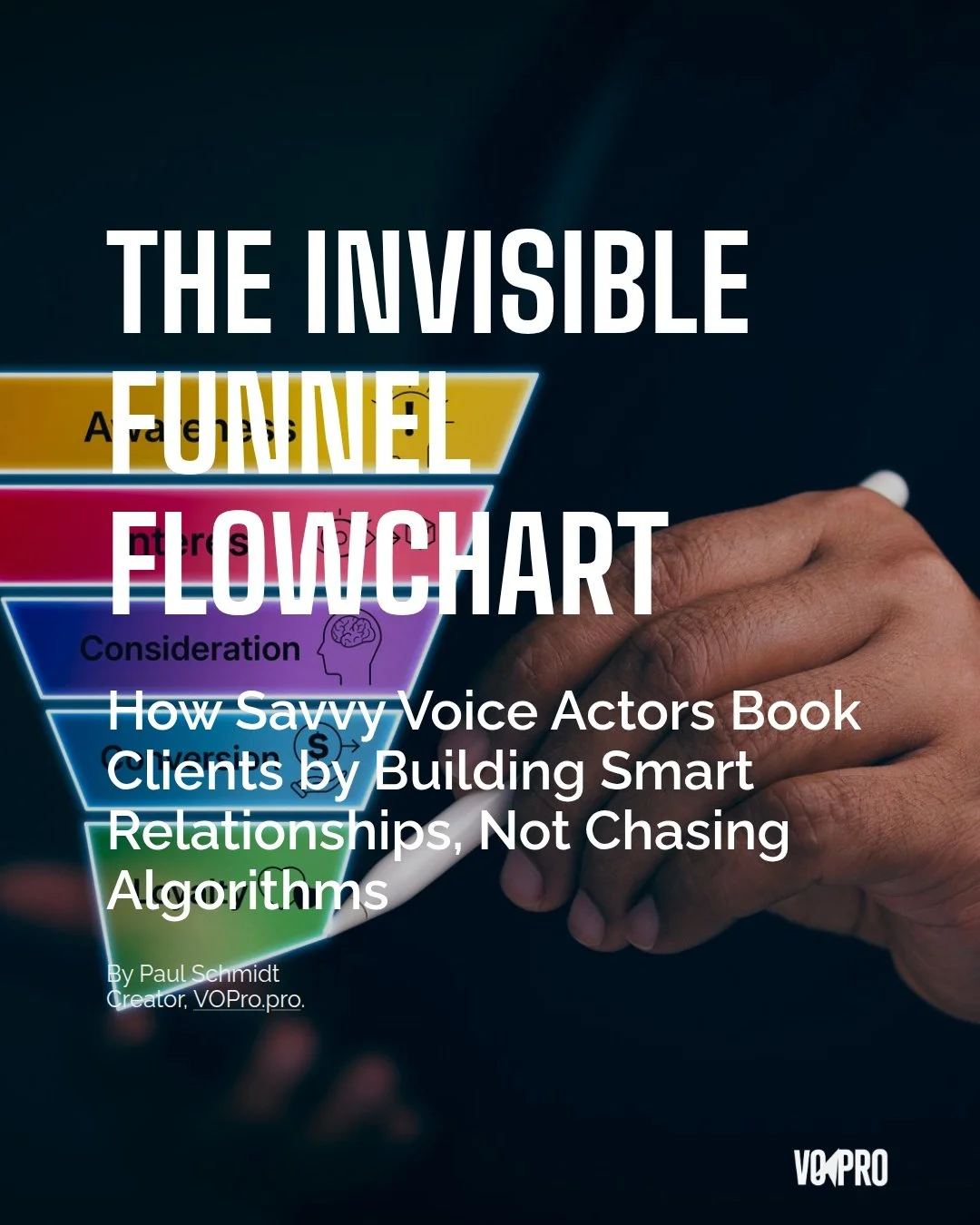
Get our free Invisible Funnel Flowchart and move beyond cold pitches and start booking real gigs through genuine relationships. Click the image above.
Wait, huh? Yep.
You can optimize your profile, drop new demos, and churn out daily value posts until the cows come home and still, great potential clients will ignore you.
When it comes to LinkedIn for voice actors, what everyone says works when taken at face value is exactly what’s sinking a lot of them.
If you’re struggling to get momentum, it’s not just you.
Here’s what really happens when you treat LinkedIn like a gig vending machine instead of the business relationship platform it is.
Why SO MANY Voice Over Artists Get It So Wrong
You’ve heard it a thousand times: “Upgrade your LinkedIn. Use a professional headshot. Add the right keywords.”
That advice, and I give it myself, is the low-hanging fruit and really the bare minimum. Having a rock-solid profile is like having a great business card that just sits on your desk.
I see so many talented VOs with full resumes spending weeks obsessing over their LinkedIn profiles. They have great About sections, links to solid websites with pro demos. They post consistently, and yet all they have to show for it is a very occasional inquiry and lots of connection requests from other voice actors, none of whom can hire them.
They’re doing “everything right” and getting nothing out of it. Sound familiar?
Chasing Algorithms Instead of Relationships
Sure, regular content keeps you visible. But if your only engagement is, “Nice work!” from other talent, you’re just living in an echo chamber.
You’re not posting for the people who can actually book you. You’re posting for the platform. And that won’t get you very far.
Why Treating LinkedIn Like Fiverr Tanks Your Cred
Clients, producers, and agencies can smell desperation from a mile away. Too many voice actors view LinkedIn as a cold-calling platform, sending LinkedIn messages that reek of “hire me please!”
Decision-makers didn’t join LinkedIn to get spammed. They use it for genuine connections and industry insight.
Clients don’t want to be someone’s quick sale. They want to trust you, know you, and yeah, like you. People aren’t actively shopping for voice talent on LinkedIn. They’re there to build real relationships.
If you position yourself as a solutions provider, not just another yahoo looking for work, you’ll stand out.
Weak Positioning Kills MOmentum
If you sound like everyone else “I’m a versatile voice actor ready for any project!”, you’re boring and forgettable.
Use LinkedIn to position your unique voice over niche, whether it’s medical narration, indie game characters, or explainer videos for SaaS companies. People hire specialists, not generalists. Weak positioning isn’t just invisible on LinkedIn, it can be actively damaging to the growth of your VO business.
LinkedIn Is for Connecting, Not Pitching
Why 75% of Your Audience Isn’t Even There
LinkedIn membership estimates are around 1.3 billion members. But only about 310 million use the platform monthly, and just 135 million log in daily.
That gap means your LinkedIn messages are going to no one in a timely manner three-quarters of the time.
LinkedIn is great for finding decision makers, not for reaching out to them.
Take It Off LinkedIn
Here’s the distinction that changes everything: LinkedIn isn’t for communicating. It’s for finding, filtering, and moving the conversation elsewhere.
Voice actors with a steady roster of great clients aren’t living in LinkedIn DMs. They use it to identify decision-makers, discern who actually needs their type of voice, and then…they switch to direct, personalized outreach via email.
Why? Because email is where decision makers are active. Period.
Producers, agency folks, and production managers, voice buyers of all kinds use email for final decisions. LinkedIn messages get lost, ignored, or filtered. But a well-crafted, highly personalized email, especially when it references a real LinkedIn connection or post, is gold.
Start Building Real Relationships
How Kara Booked Her Biggest Client
Let me tell you about Kara (not her real name), another part-time voice actor I know who used to fire off dozens of cold LinkedIn messages every week. Crickets. Then she tried a different approach:
She identified three video production companies she admired.
Instead of sending a pitch, she started commenting meaningfully on their LinkedIn posts, not asking for work, just genuine curiosity and encouragement.
After about a week, she noticed one producer liked a comment she made on a particular project announcement.
Kara sent a brief, friendly email, not asking for work, just saying she admired the project and asking a smart question, and included a link to her corporate narration page.
Two months later, after a friendly back-and-forth, Kara got an audition and was hired for a corporate anthem video that paid more than her three most prior gigs combined.
It wasn’t luck. It was relationship-building, patience, and the courage to just be human.
Genuine conversations are what set you apart. Instead of dropping links to your demo ad nauseum, ask questions. Show up with insights about their industry and challenges, not your agenda. Congratulate people you’d like to work with on their achievements.
This isn’t being manipulative. It’s just how pros build trust and get remembered.
Adopt a Relationship-First Mindset
Myth #1: Posting More Means More Work
Wrong. Quality beats quantity. A handful of consistent, meaningful conversations or comments with targeted decision-makers is worth more than 30 generic posts nobody reads.
Myth #2: More Connections Mean More Gigs
Nope. A list of 5,000 talent agents, other voice actors, and random marketing people means nothing if they aren’t engaged. Curate your network. Be intentional.
Myth #3: LinkedIn Is Just for Big Shots
Absolutely not. Smaller studios, independent game developers, marketing agencies… they spend some time on LinkedIn. The difference is, they expect a connection to feel like a real human connection, not a telemarketing call. That’s best done through direct email.
How Winning VO Talent Really Use LinkedIn
A Smart LinkedIn Workflow for Voice Actors
Research: Use keywords relevant to your niche, like “explainer video production,” “e-learning content manager,” etc., and make a short list of target contacts.
Connect with Context: If possible, reference something specific, like a recent project, a mutual connection, an interesting post. Avoid the “would love to connect” drivel. 🤮
Engage Publicly, Warm-Up Privately: React and comment meaningfully on their content. Not every day like a stalker psychopath, but enough to be recognized as a supportive follower.
Move to Email Once Warm: Once you build rapport, reach out and reference the conversation by email.
Nurture, Don’t Nag: Regularly provide relevance and value. Share relevant content (and why), celebrate their wins, or provide a useful resource.
Sample Message Framework
Instead of:
“Hi, I’m a professional voice actor. Here’s my demo. I’d love to be considered for your next project!”
Try:
“Hi [Name], I saw your post on LinkedIn on campaign you did for [Brand]. You struck a tone that felt genuine and warm, something I try to capture in my own narration work. Check out my demos at [your website].”
Building Your VO Brand Beyond your LinkedIn Profile
Yes, you need a solid profile. But clients aren’t looking for the best formatted headline. They want to see evidence that you’re credible, professional, and easy to work with: engaging posts, genuine recommendations, and most importantly, a professional story that shows you’re actively involved in their world, not just stalking for gigs.
Instead of listing every project, share what you learned from each one, e.g. “Narrating that medical explainer taught me a ton about pacing technical language. Here’s what helped…”
That builds depth and attracts the right kind of conversations.
How to Actually Reach Voice Over Clients
Remember those numbers? Only 1 in 10 LinkedIn members log in daily. Your painstakingly crafted message might well be read months, even years from now, if at all.
Email lands directly and promptly where decision makers work: in their inbox.
How to Stop Failing and Start Winning
Audit your profile: Make it about how you help, not just who you are.
Research your prospects: Find those you can authentically help or admire. What do they struggle with that you can solve?
Be human first, talent second: Comment, question, and encourage. Do not pitch cold.
Move conversations to email. That’s where business gets booked.
Follow up consistently, not constantly: Balance persistence with patience. Relationships take time. Don’t be clingy.
Keep learning: Track which approaches work and don’t be afraid to ask for feedback, especially from prospects.
Why Voice Actors Actually WIN on LinkedIn
You don’t need to out shout your competition. You need to out connect them.
The voice actors who level-up from part-time to full-time aren’t spamming LinkedIn messages every day. They’re building targeted, real relationships and moving those chats to where the real deals happen: email.
LinkedIn is just the start. Don’t get hypnotized by big numbers or vanity metrics. Focus on the few, done well. Those relationships transform your career.
If you’re ready to escape your echo chamber and start earning bigger, more consistent bookings, start now.