Why Your Gmail Address Is KILLING ☠️ Your Credibility
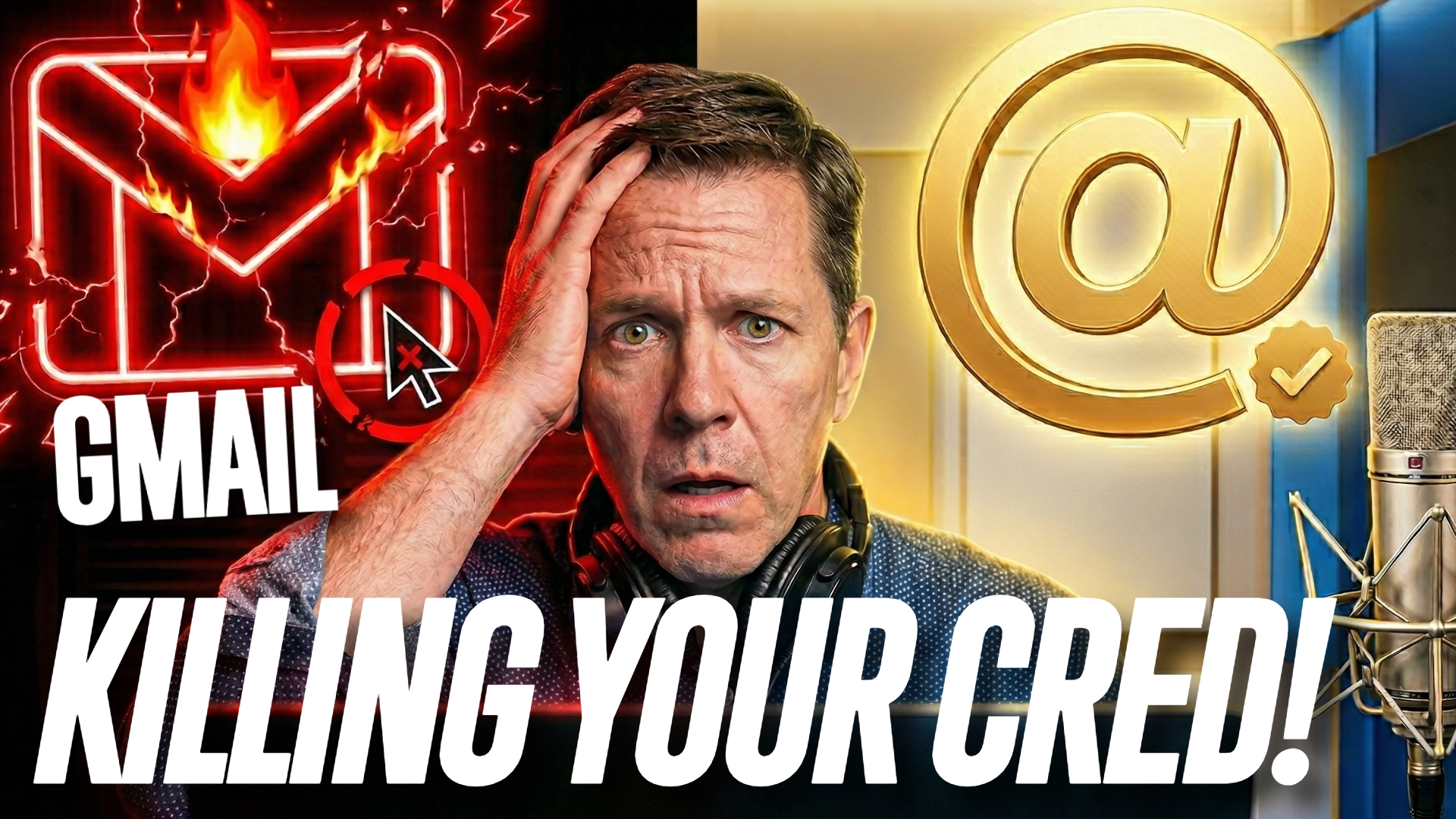
If you’re emailing prospects from “JaneDoeVO@gmail.com,” you’re telling the world in big, red, neon letters that YOU’RE NOT SERIOUS ABOUT YOUR VO BUSINESS!
Get our free guidebook with 3 quick steps to a professional first impression. Click the image above.
In a crowded industry where first impressions mean the difference between someone wanting to work with you and total silence, your email address is instantly signaling whether you’re a pro or an poser.
Let’s talk about why your generic contact info is costing you opportunities and exactly what to do if you want to be seen as the real deal in a world full of hobbyists and hustlers.
The Email Address That Shouts “HACK!”… OR Worse
When Gmail is Good Enough and When It’s Not
Maybe you started with a Gmail or Outlook account when you recorded your first gig. Maybe you’ve meant to get more professional for years, but new gear, demos, or training sessions always moved ahead on your to-do list.
But here’s the thing: to casting directors, agents, and production clients, sending your business communications from a generic free account is like using a toy microphone.
You just look like a chucklehead. It’s a strong signal you might be either brand new, not fully invested, or both, and that’s not the image you want.
Real Pros Have Real Email Addresses
Let’s say you were casting a project and you were reviewing submissions. Dozens of talented voice actors apply. Half reach out using “VoiceGuy2020@gmail.com.”
The others use their own professional domains: “jay@jaylenvo.com.”
Whose email do you open first? Who feels like a safe, vetted choice?
Clients go with the second option almost every time.
The Scam Factor: How Generic Emails Cost You Trust
Think about this: one of the biggest tells of a VO scam is a generic, and in most cases a Gmail email address. On forums and in private groups, the fastest way to spot a scam offer is that it comes from a burner Gmail address. Occasionally, they’ll use Yahoo or Outlook or AOL.
So that means, just by association, your own generic email puts you at risk of being ignored, or worse, marked as a possible spammer or fraud in your clients’ inboxes.
Real Scams, Real Stories
Spend a little time in the voiceover community and you’ll hear time and again, these same red flags came up:
An email from a generic, usually gmail domain, with a vague intro
An appeal to your ego: “We came across your site (they never say how) and your talent really jumped out at us!” 🤦🏻♂️
Requests for personal info or odd payment methods
No clear website or social proof, OR they’re impersonating a real person at a real company with a fake email like disneycasting@gmail.com
And guess what? Lots of real, hard-working VOs are skipped over every day because the client simply doesn’t trust that gmail.com or outlook.com means serious business.
Free Web Domains: The Cousin of Amateur Email
If your online home looks like “https://janedoevoiceover.wixsite.com/voiceover,” you’re screaming hobbyist” even louder. Would you buy from a shop with a cardboard sign and no address, or the one in a real, professional building?
The psychology is the same.
Having a custom domain (even if the site is simple) tells clients you’re invested. It’s just as important as a proper demo. In some cases, even more when it comes to initial vetting and outreach.
URLs That Cost You Clicks
Here are some red-flag web addresses that make clients hesitate:
Wixsite, Weebly, or Squarespace trial URLs
3rd party portfolio links like “soundcloud.com/janedoevoiceover”
Clunky, unbranded URLs with hyphens, numbers, or odd spellings
If your domain doesn’t align with your business name, or if it shouts, “I did this for free,” you’re giving the impression you may not stick around or aren’t making enough from VO work to justify even minimal expenses.
Why Professional Image Matters Even if You’re Still Part-Time
“But I’m Just Getting Started!”
Maybe you’re in the trenches, building your client roster while still balancing a day job. That’s normal. But the biggest VO pros didn’t wait until they felt established to set up a pro image. They did it first, before the first big client said yes.
3 Ways You Lose Out With Free Emails & Sites
Deleted without Opening: Your generic email or trial website lands in spam, and therefore never gets opened or even clicked.
Instant Price Ceiling: You subconsciously train clients you’re a dabbler, and therefore cheap, even before they’ve heard your demo.
Word-of-Mouth Roadblocks: Casting directors may refer talent, but only the ones who look bookable, professional, and safe to put in front of a client.
How to Upgrade Your Professional Image Fast and Affordably
Step 1: Get a Custom Domain and Email
There’s no excuse in 2026: you can set up a custom email (like yourname@yourdomain.com) for the cost of a few coffees a year. You’ll not only look like a pro, you’ll protect your business reputation for the long haul.
Quick-Start Guide to Professional Email
Buy your domain from providers like Squarespace Domains, Namecheap, etc.
Email hosting: I use and recommend Google Workspace, or your own website host (WordPress, Wix, etc.). All let you create email addresses with your unique domain.
For your main admin email, the one you send your most important, non-marketing message through like invoices and audio files, use something like yourfirstname@yourcustomdomain.com.
If you’re doing outbound email marketing, get one or more separate domains with an email address for each, like yourfirstname@yourothercustomsomain.com. Forward web browser traffic from that url to your main domain. Do not forward your email to your main email address.
Step 2: Upgrade Your Website
A custom URL doesn’t mean a four-thousand-dollar site.
Even a single page with your brand, demos at the top, and about section and contact form (without ads or “wixsite” branding) instantly increases trust.
Tips:
Match your website and main email domain.
Keep it clean and simple; focus on audio demos and easy-to-find contact info.
Show a professional headshot and logo if possible.
Step 3: Audit Your Client Touchpoints
Where do you list your email and website? Check:
Social bios (Twitter, LinkedIn, Instagram, Clubhouse, everywhere)
VO genre directories (Voice123, Mandy, Voices dot com, Backstage, etc.)
Your business cards and invoices
Align everything to your new, professional brand. Don’t leave legacy Gmail or free URLs floating around for clients to find!
Other Credibility Killers You Might Be Missing
1. Missing or Inconsistent Branding
If your logo, color scheme, or even your demo filenames are all different, it chips away at your professional image.
2. Cluttered or Outdated Demos
A mish-mash of old tracks, expired links, and outdated trends signals you don’t update and maintain your business.
3. Social Media Mismatch
If your email claims JohnDoeVO, but Instagram is “@JohnDoe_TheRealArtist,” clients start to wonder, are you hiding something?
4. No Reviews or Testimonials
Even a few lines from satisfied clients help build trust. If you’re brand new, I get it, you have to start somewhere, but understand that social proof is gold.
What Happens When You Make the Switch
The difference is night and day. VO pros who made the switch to custom email and branded sites:
Have dramatically higher response rates to cold outreach
Eliminate or minimize the obstacles to people doing business with you, like
More consistent referrals from agents and peers
It’s Time to Go Pro
You wouldn’t show up to an in-person recording session in pajamas and hand clients a crumpled resume, so don’t do the digital equivalent every time you hit send from Gmail.
If you’re hungry to become a full-time voice actor, treat your brand like a business. Invest the tiny bit of time and money to move from hobbyist to hireable.
Swap out that generic address, lock down your own website, and watch the way people respond to your work from one simple change.