Why “Just Post on Social Media” Is Shitty Advice for Voice Actors
If you've ever looked for advice on marketing your voiceover business, you've heard this one. Make more Reels. Post every day. Show your personality. Apparently, somewhere between filming a booth tour and the latest voice actor challenge (🤦🏻♂️), clients are supposed to start beating down your door.
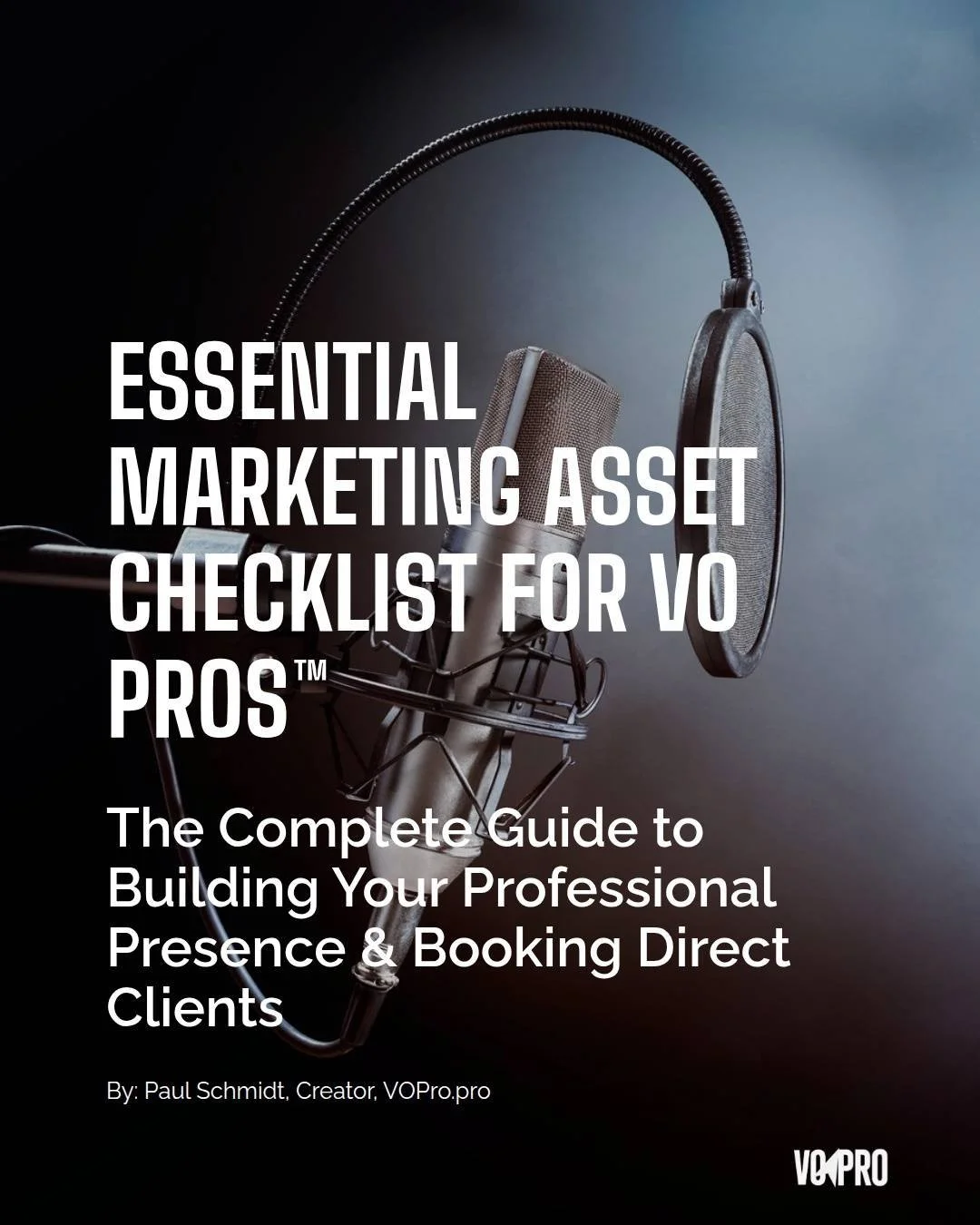
Get our Essential Marketing Assets Checklist and build a pro presence online. Click the cover above.
Except that's not how anything works.
You spend an hour making a video, another twenty minutes writing a caption, and check back to discover 7 views, two likes, and a comment from another voice actor asking what mic you're using. Congratulations.
Social media isn't useless. It can build awareness, credibility, and relationships. But telling voice actors to “just post more” without explaining whom they're trying to reach or what those posts should accomplish is atrocious business advice.
Attention Isn't Opportunity
A video of you doing celebrity impressions might get 20,000 views. That's fun, but if those viewers are other performers and people who enjoy impressions, few are actually in a position to hire you.
Now imagine a LinkedIn post about how good narration helps employees understand complicated training material. Maybe it gets 80 views, but nine of those viewers are learning and development managers at companies that regularly produce training content.
Which post would you rather have?
If your goal is bookings, I'll take a handful of qualified prospects over thousands of random eyeballs any day. Visibility gets you noticed. Opportunity puts you in front of people with a reason to hire you and the authority to do so.
But there's another problem with social media marketing that doesn't get nearly enough attention: the audience you're building may not be the audience that buys.
Take a look at your followers. Seriously. How many are people who might actually hire a voice actor?
You'll probably find lots of other voice actors. That's understandable; our community is supportive, and we naturally connect with people in the trenches with us. But supportive colleagues and prospective clients aren't the same audience.
Think about what voice actors commonly post: audition war stories, studio upgrades, opinions about AI. Interesting topics for performers, definitely. But are those the things keeping a video producer awake at night?
No.
A producer is thinking about deadlines, budgets, creative direction, and finding talent who won't create additional headaches. A training manager wants employees to understand the material. An ad agency needs a voice that serves the campaign.
When your content addresses those concerns, you're doing more than demonstrating your knowledge of voiceover. You're showing clients that you understand their businesses.
And that means you need something more important than a content calendar. It means positioning.
Imagine a voice actor whose website announces they're available for commercials, animation, audiobooks, documentaries, e-learning, video games, and anything else involving a mouth (keep it clean!). They post constantly, but nothing connects their content to a particular buyer or problem.
Now think about someone whose messaging focuses on helping healthcare organizations communicate complicated medical information clearly and compassionately. Their posts discuss patient education, medical terminology, and building trust with an audience.
Which actor is a healthcare video producer more likely to remember?
That doesn't mean you have to choose one genre forever and ever. It means your marketing should give specific buyers a reason to recognize you as a good fit. Positioning isn't about limiting what you can do; it's about making it easier for the right people to understand why they should hire you.
And if your positioning is confusing, posting 20 times a week just communicates the confusion more frequently.
Your Time Is Worth More Than That
I have a particular problem with marketing advice that assumes everyone has unlimited time to create content. Plenty of voice actors are building businesses around day jobs, families, sometimes caregiving, and other responsibilities. They might have five or six hours a week for marketing if they're lucky.
Telling those people to make daily videos, maintain seven social accounts, and constantly feed the algorithm is a fucking fantastic recipe for exhaustion. Worse, it takes time away from activities that may have a more direct impact on revenue.
Let’s say you've got one hour for marketing today. You could spend it making a Reel and hoping the algorithm shows it to someone who can hire you. Or you could research 15 production companies, identify people who hire voice talent, send thoughtful introductions, and follow up with prospects you've already contacted.
Which activity gives you more control over who hears from you? That's a pretty important calculation when your marketing time is limited.
And while we're talking about control, let's address another problem with building your business around social media. You're putting an awful lot of faith in tech companies whose priorities have nothing to do with your success.
Algorithms change, reach fluctuates, and something that worked great six months ago might not move the needle today. That's not a solid foundation for a business you're hoping will replace your paycheck.
Compare that with a professional website, a database of qualified prospects, and relationships with people who regularly hire voice talent. Those are assets you can keep developing regardless of what Instagram decides to push out next week.
I'm not saying abandon social media necessarily. I'm saying don't confuse renting attention with building a business.
What Should You Do Instead?
I teach a simple business development framework: Target. Reach Out. Grow. It gives voice actors a way to market deliberately instead of throwing activities at the wall and hoping something sticks.
Start by identifying the clients you want to work with. Maybe they're ad agencies, production companies, corporate learning departments, animation studios, or publishers. Then find out what they produce, who makes hiring decisions, and what challenges they're dealing with.
The better you understand their world, the easier it is to explain how you fit into it. That understanding should drive both your outreach and the content you publish.
Once you know whom you're targeting, make those connections. Send a personalized intro email, engage thoughtfully with a producer's LinkedIn post, attend an industry event, or reconnect with someone you've worked with before.
And social media can play a role here. The difference is that you're using it to build relationships with identifiable prospects instead of hoping random posts magically produce clients.
Don't expect every email or comment to create an immediate booking, either. You're building familiarity and trust so that when a need arises, you're someone the buyer already knows.
And marketing doesn't end with an introduction. Follow up, keep track of conversations, stay in touch with past clients, and share material that’s relevant and provides tangible value to your prospects and clients. Make it easy for buyers to hear your demos and get int touch.
Then measure what matters: replies, conversations, inquiries, bookings, repeat work, and revenue. Those numbers tell you far more about your marketing than likes and follower counts.
Over time, you'll figure out which activities create opportunities and which ones merely keep you busy.
You're Building a Business, Not an Influencer Career
None of this means you should stop posting. It means every post should have a purpose.
Maybe you're sharing a project that demonstrates your ability to handle complex technical narration. Maybe you're commenting on a challenge in an industry you serve, congratulating a client on a campaign, or staying visible to people you've already met.
Before you publish, ask yourself: Who is this for? Why should they care? What do I want them to do after seeing it? If you can't answer those questions, maybe the post doesn't need to happen.
You don't need 50,000 followers to make a living as a voice actor. You need enough of the right people to know you, trust your abilities, and think of you when they need talent.
A talent with solid relationships at a dozen busy production companies is better positioned than somebody with a huge following and no connections to buyers. One is developing potential repeat business. The other is just entertaining strangers.
If you enjoy creating content, terrific. Keep doing it. But don't let the pressure to feed the algorithm crowd out researching prospects, making introductions, following up, and taking care of people.
Your goal isn't to become internet famous. It's to build a profitable, sustainable voiceover business. No amount of posting can replace knowing your clients, understanding their needs, and building relationships that lead to work.